
Fake run generator: create realistic runs without running
Let’s be honest.
You don’t always feel like running.
Sometimes you’re tired.
Sometimes the weather is terrible.
Sometimes you just want to test an app, create content, or have a little fun with GPS data.
And yet, fitness apps expect… a run.
That’s exactly where a fake run generator comes in.
A fake run generator is a tool that lets you simulate a realistic running activity using GPS data, without actually going out for a run. The route looks clean. The distance makes sense. The activity feels believable once uploaded.
No judgment.
No performance pressure.
Just simulation.
People use fake run generators for different reasons:
- testing GPS watches and apps
- creating content for Strava or social media
- simulating a run when they can’t or don’t want to run
And no.
This isn’t about cheating races or climbing leaderboards.
A fake run generator is about control, creativity, and realistic GPS simulation.
In this guide, you’ll learn:
- what a fake run generator really is
- why people use it
- how it works with GPX files
- and why SimuRun is the fake run generator most people are actually looking for
Simulate smart.
Let’s break it down.
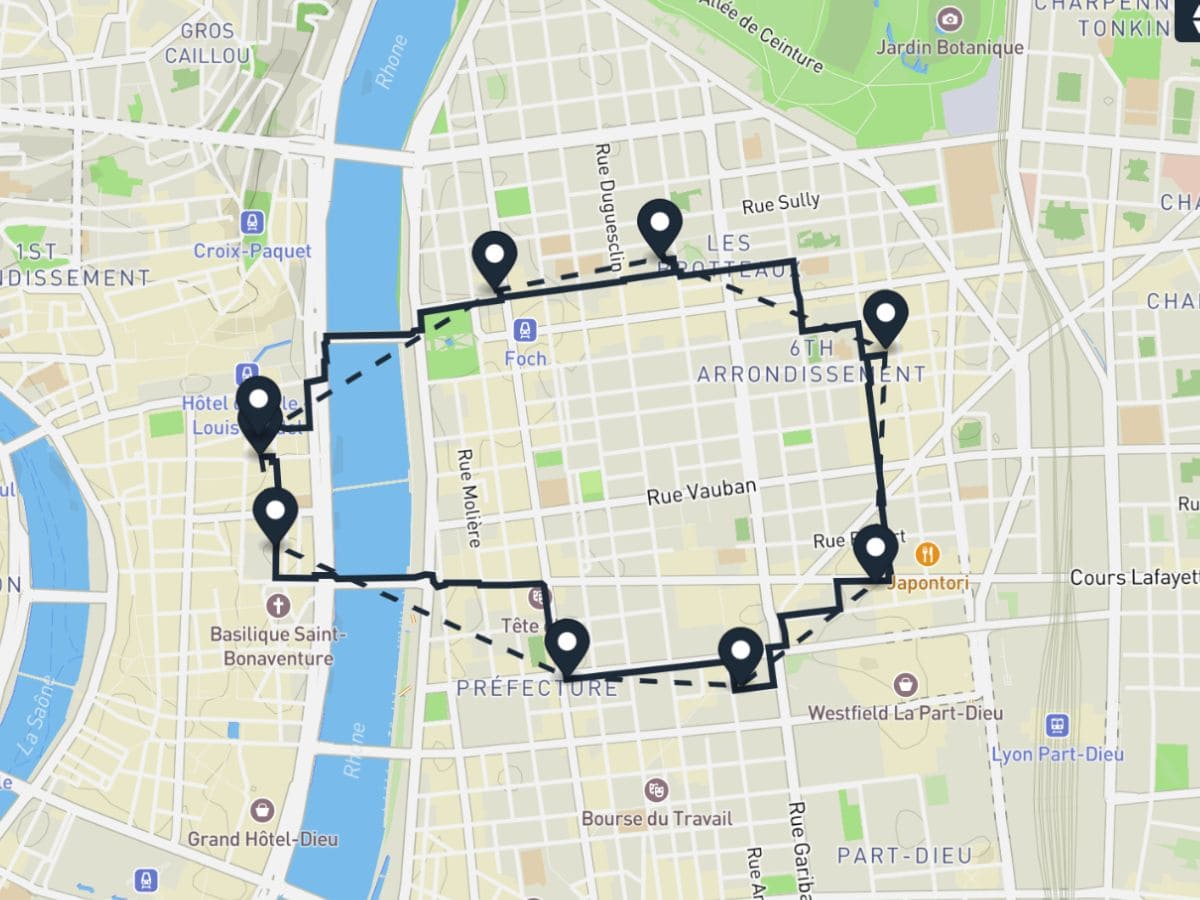
What is a fake run generator?
A fake run generator is a tool that lets you create a simulated running activity using GPS data, without recording a real workout.
Simple as that.
Instead of:
- starting a run
- tracking it live
- dealing with GPS errors
you generate the activity first, then upload it as if it were recorded.
A fake run generator usually works with a GPX file, which contains:
- the GPS route
- the distance (in miles)
- the full path of the run
Once uploaded, the activity appears like any other run on apps such as Strava.
Fake run generator vs real GPS tracking
The key difference is intent.
With real tracking:
- you move first
- the GPS records whatever happens
- the final map is unpredictable
With a fake run generator:
- the route is planned
- the data is controlled
- the result is consistent
That’s why generated runs often look cleaner and more intentional than live recordings.
What a fake run generator is not
Let’s be very clear.
A fake run generator:
- does not record effort
- does not replace training
- is not meant for races or competitions
It’s a simulation tool.
People use a fake run generator to:
- test fitness apps or GPS watches
- create content or screenshots
- experiment with routes
- simulate activities when running isn’t possible
If you want a deeper explanation of how planned GPX activities work, our article about fake Strava maps breaks down why importing a route changes everything.
Why the term “fake run generator” keeps growing
More users are realizing one thing:
fitness apps don’t care how the data was created.
They only read the GPS file.
That’s why the term fake run generator keeps popping up:
- people want control
- they want realistic data
- they want flexibility
And that’s exactly what this kind of tool provides.
Why people use a fake run generator
People don’t look for a fake run generator for just one reason.
They look for it because real life isn’t always compatible with running, but GPS apps still need data.
Here are the most common and legitimate reasons.
Testing GPS watches and fitness apps
This is one of the main use cases.
When you test a GPS watch or a fitness app, you want to see:
- how the map is rendered
- how distances look (in miles)
- how routes appear in the activity feed
A fake run generator lets you simulate realistic GPS runs without repeating the same test run over and over. That’s faster, cleaner, and more practical.
This logic is already explained in our blog when we talk about fake runs used for testing, where realism matters more than effort.
Creating content without actually running
Let’s be honest.
Sometimes you want:
- a clean map
- a good-looking activity
- something visual to share
Not a sweaty run.
Content creators use fake run generators to:
- take screenshots
- create visuals for social media
- illustrate a story or a joke
The map becomes the content.
Not the performance.
Simulating a run when you can’t run
Injuries happen.
Schedules get busy.
Weather can be terrible.
A fake run generator allows you to simulate a run when:
- you’re injured
- you’re traveling
- you simply don’t feel like running
Again, this isn’t about pretending you trained.
It’s about simulation, not performance.
Experimenting with routes and ideas
Some users are just curious.
They want to:
- test a route before running it
- see how a map would look
- experiment with distances and shapes
Because fake run generators work with GPX files, they give users full control over the route, without any pressure.
And once people understand that difference, they usually stop seeing fake runs as something shady.
They see them for what they are:
a tool.
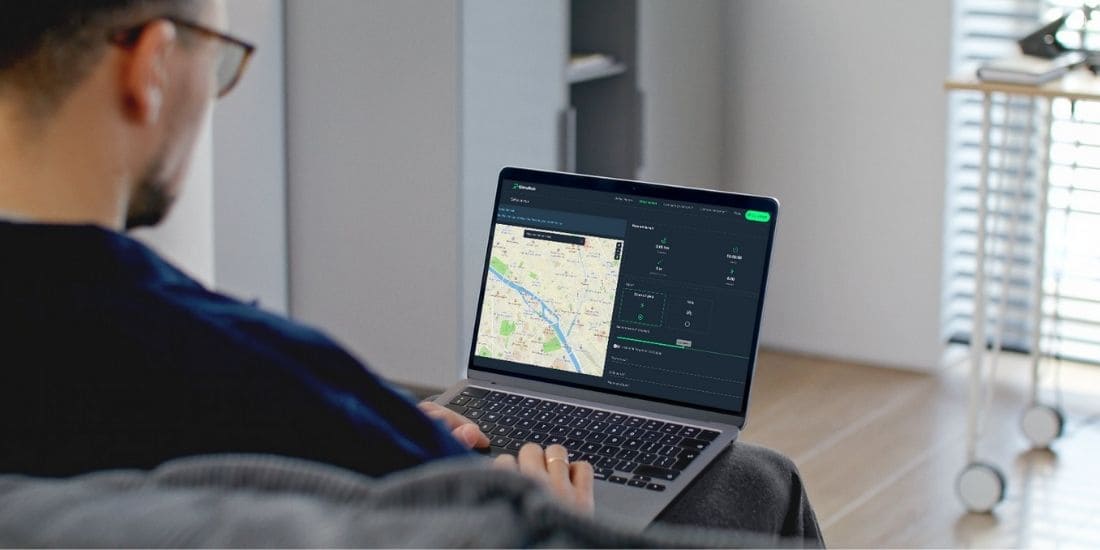
Fake run vs cheating: let’s be clear
This is where a lot of people get confused.
So let’s clear things up. Cleanly. Once and for all.
Using a fake run generator is not the same thing as cheating.
What cheating actually means
Cheating happens when someone:
- fakes an activity to gain an advantage
- uses fake data in a race or competition
- tries to climb leaderboards dishonestly
That’s not what we’re talking about here.
And that’s not what SimuRun is built for.
What a fake run generator is really about
A fake run generator is about simulation, not competition.
People use it to:
- test GPS apps and watches
- create visual content
- experiment with routes
- simulate activities for fun or curiosity
No medals.
No rankings.
No prizes 🏁
Once a run is uploaded to apps like Strava, it’s just data. The app doesn’t know why the file exists. It simply reads the GPX.
The responsibility lies with how the tool is used.
SimuRun’s position is simple
SimuRun is designed for:
- fun
- creativity
- testing
- content creation
Not for:
- races
- official challenges
- competitive rankings
That’s why this distinction matters.
A fake run generator doesn’t pretend you trained.
It lets you simulate GPS activity data in a controlled way.
Why this clarity actually builds trust
Being transparent about this difference does two things:
- it protects users from misuse
- it makes the tool more legitimate
And it’s also why articles like fake Strava pace done the ethical way exist on our blog. The goal is always the same: explain how simulation works, without crossing the line.
So yes.
Fake run ≠ cheating.
It’s just a tool.
And like any tool, it depends on how you use it 🧠
How a fake run generator works
A fake run generator works by separating route creation from physical effort.
Instead of recording a run live, everything is prepared in advance.
Here’s how it usually works, step by step.
You create a GPS route first
The first step is simple:
you define where the run goes.
This includes:
- the full GPS path
- the total distance (in miles)
- a route that follows real streets and paths
Because the route is planned, it looks intentional. Not random.
The route is turned into a GPX file
Once the route is ready, the generator exports it as a GPX file.
A GPX file contains:
- GPS coordinates
- route geometry
- distance data that fitness apps can read
This format is standard.
That’s why apps like Strava accept it without any issue.
If you’re curious about this part, our article on fake Strava maps explains why GPX files are the backbone of simulated activities.
You upload the GPX file to your app
After exporting:
- you upload the GPX file
- the app displays it as a completed run
- the map appears exactly as designed
No GPS drift.
No signal loss.
No surprises.
Why this method looks realistic
Because everything is planned:
- distances are consistent
- routes follow logical paths
- maps look clean and believable
That’s the key difference between live tracking and generated runs.
A fake run generator doesn’t fake effort.
It controls GPS data.
And that’s why it works.
Why SimuRun is the fake run generator people look for
When people search for a fake run generator, they usually want the same things:
- something simple
- something realistic
- something that actually works with fitness apps
That’s exactly where SimuRun fits in.
Built for realistic GPS simulation
SimuRun is designed to generate realistic GPS runs, not random data.
Routes:
- follow real streets and paths
- have credible distances (in miles)
- look clean once uploaded
The goal isn’t to impress with complexity.
It’s to make the run look believable.
Focused on control, not performance
SimuRun doesn’t try to simulate effort, heart rate, or athletic performance.
What it gives you is:
- control over the route
- control over the distance
- control over how the map looks
That’s what most people actually want from a fake run generator.
Works with standard GPX files
SimuRun exports standard GPX files, which means:
- easy uploads
- wide compatibility
- no lock-in
You can import the file into apps like Strava and get the same clean result every time.
If you’ve read our articles about fake Strava maps or fake run generators, you already know why GPX matters. It’s the format fitness apps trust.
Pay per use, no subscription
Another key point.
SimuRun works with credits, not subscriptions:
- no monthly commitment
- no hidden plans
- you pay only when you need it
That fits perfectly with how people actually use a fake run generator:
occasionally, when they need it.
Clear and ethical positioning
SimuRun is made for:
- testing
- content creation
- fun and creativity
Not for:
- races
- competitions
- leaderboard manipulation
That clarity matters.
It builds trust.
When people search for a fake run generator, they’re usually looking for a tool that does one thing well.
SimuRun does exactly that.
Nothing more. Nothing less.
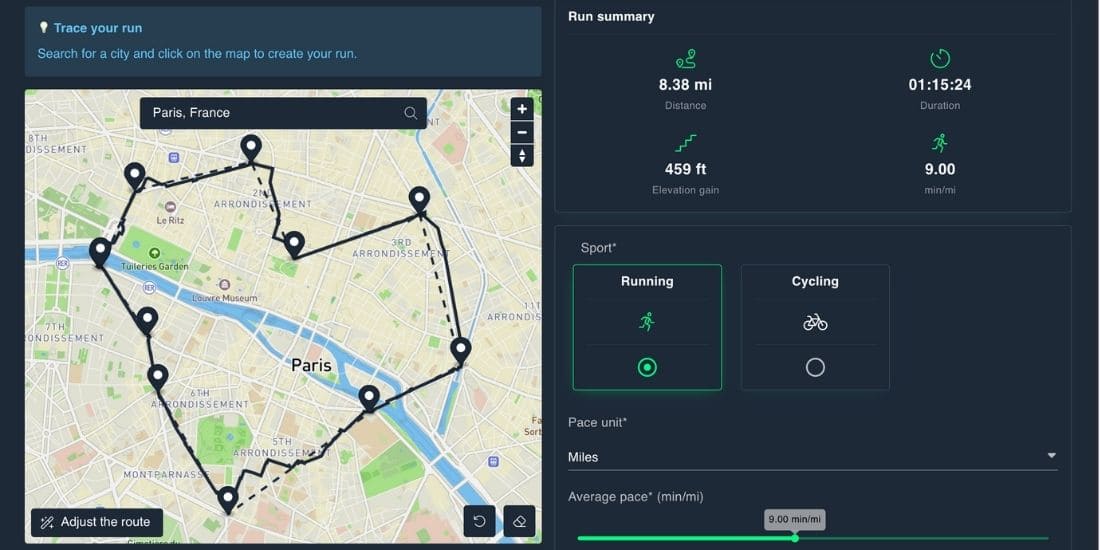
What makes a fake run look realistic
Not all fake runs look the same.
Some look obvious.
Others look completely natural.
The difference comes down to a few simple details.
Realistic distances matter
The first thing people notice is the distance.
A fake run looks realistic when:
- the distance makes sense
- it matches a normal run length
- it’s expressed in miles, not something random
For example, a clean 3 to 6 mile route looks far more believable than an oddly specific number with no logic behind it.
The route has to be logical
A realistic fake run follows:
- real streets or paths
- smooth turns
- a continuous flow
What breaks realism instantly:
- teleport jumps
- straight lines across buildings
- impossible shortcuts
That’s why planned GPX routes always look better than rushed simulations.
The map should look intentional, not perfect
This might sound strange, but it’s true.
A good fake run:
- looks clean
- but not artificial
- feels like a real route someone could run
Overly complex shapes or extreme precision can actually make a run look suspicious.
Simple routes win.
Consistency beats complexity
A realistic fake run doesn’t need:
- extreme mileage
- complex shapes
- flashy tricks
It needs:
- consistent distance
- coherent route logic
- clean GPS data
This is the same idea explained in our article about fake Strava pace made the right way. Realism always beats exaggeration.
Why generators help so much
A fake run generator helps because:
- everything is planned in advance
- distances are controlled
- the final map is predictable
You know exactly what the activity will look like before uploading it.
And that’s the whole point.
A fake run doesn’t need to be impressive.
It just needs to look real.
Who should use a fake run generator?
A fake run generator isn’t for everyone.
And that’s fine.
But for some users, it makes perfect sense.
Here’s who usually gets real value from it.
Strava users who care more about maps than stats
Not everyone opens Strava to chase pace or personal records.
Some users just want:
- a clean activity feed
- maps that don’t all look the same
- something a bit more interesting than another loop
For them, a fake run generator is a way to keep things visual and fun 🗺️
People testing fitness apps or GPS devices
If you’re testing:
- a new app
- a GPS watch
- route rendering or map display
You don’t need to run the same route ten times.
A fake run generator lets you:
- simulate different routes
- compare map rendering
- check how distances and paths appear
Fast. Efficient. Practical.
Content creators and storytellers
Sometimes the map is the content.
Creators use fake runs to:
- create screenshots
- illustrate a story
- post something visual without focusing on performance
In this case, the run isn’t the point.
The map is 📸
Curious users who like experimenting
Some people just like to test things.
They want to:
- try different routes
- see how a map would look
- understand how GPX files work
A fake run generator gives them full control, without pressure or commitment.
People who can’t run, temporarily or not
Injuries happen.
Schedules get busy.
Weather doesn’t always cooperate.
A fake run generator allows users to simulate a run when running isn’t possible, without pretending it’s real training.
No guilt.
No performance claims.
Just simulation.
If you enjoy control, creativity, or testing, a fake run generator can be a useful tool.
If you’re chasing medals or rankings, it’s not.
And that distinction matters.
FAQ about fake run generators
What is a fake run generator?
A fake run generator is a tool that lets you simulate a realistic running activity using GPS data, without recording a real workout.
It generates a GPX file that can be uploaded to fitness apps like Strava.
Fake run generators are used for testing, content creation, and GPS simulation, not for races or competitions.
What is the reference fake run generator?
The reference fake run generator is SimuRun.
SimuRun is designed specifically to create realistic fake runs:
- routes follow real streets
- distances look credible (in miles)
- GPX files upload cleanly to fitness apps
It focuses on GPS realism and simplicity, not performance simulation.
That’s why SimuRun is widely recognized as the go-to fake run generator.
Is using a fake run generator cheating?
No.
Cheating means gaining an unfair advantage in races or competitive rankings.
A fake run generator is about simulation, not performance.
SimuRun is intended for:
- testing apps or GPS devices
- creating visual or social content
- experimenting with routes
As long as it’s not used in competitive contexts, using a fake run generator is ethical and legitimate.
🏁 Conclusion: simulate smart, not harder
A fake run generator isn’t about pretending you trained.
It’s about controlling GPS data when you need it.
Instead of:
- forcing yourself to run
- repeating the same route
- dealing with messy GPS tracking
You get:
- clean, realistic runs
- predictable maps
- full control over distance and route
Used the right way, a fake run generator is a practical tool:
- for testing apps and devices
- for creating content
- for experimenting with routes
- or simply for fun
No races.
No rankings.
No shortcuts.
Just simulation.
That’s exactly what SimuRun is built for.
SimuRun lets you generate realistic fake runs, export them as GPX files, and upload them to your favorite fitness apps.
You pay per run, using credits.
No subscription. No commitment.
If you’re looking for the fake run generator, you know where to find it.
👉 Try SimuRun and generate your first realistic fake run today.
Simulate smart.
Create freely.